Testing for toxic mold
A toxic mold test does not exist as a category. Laboratories identify species, not toxicity — and the major evidence reviews tie health effects to building dampness rather than to any one organism.
What each test actually reports
| Method | What it reports | What it does not | Cost | Turnaround |
|---|---|---|---|---|
| DIY surface kit | Genus, sometimes species, of what is on the spot you sampled — with the lab step. | Toxicity. Extent. Source. Anything without the lab step, which is often skipped. | $10–$50 plus $30–$70 per sample | Days to a fortnight by post |
| Professional surface sampling | The same identification, with chain of custody and a defensible protocol. | Whether anything is airborne, or how far the growth extends. | Included in an assessment; standalone typically $100–$300 | 2–5 days |
| Professional air sampling | Spore counts by type at those spots during those minutes, against a same-day outdoor control. | Toxin levels. Source. Extent. Anything at all without the outdoor control. | $300–$700 for a small set with a control | 2–5 days |
| ERMI / DNA dust panel | Relative abundance of listed species in settled dust, as a research-derived index. | A diagnosis for an individual building. The EPA developed it as a research tool and has said it was not validated for that use. | $150–$400 | 1–2 weeks |
| Urinary mycotoxin panel | Compounds reported in a urine sample. | Any established link to building exposure. These were not validated for establishing building-related exposure and results are hard to interpret. | $200–$400 | 1–3 weeks |
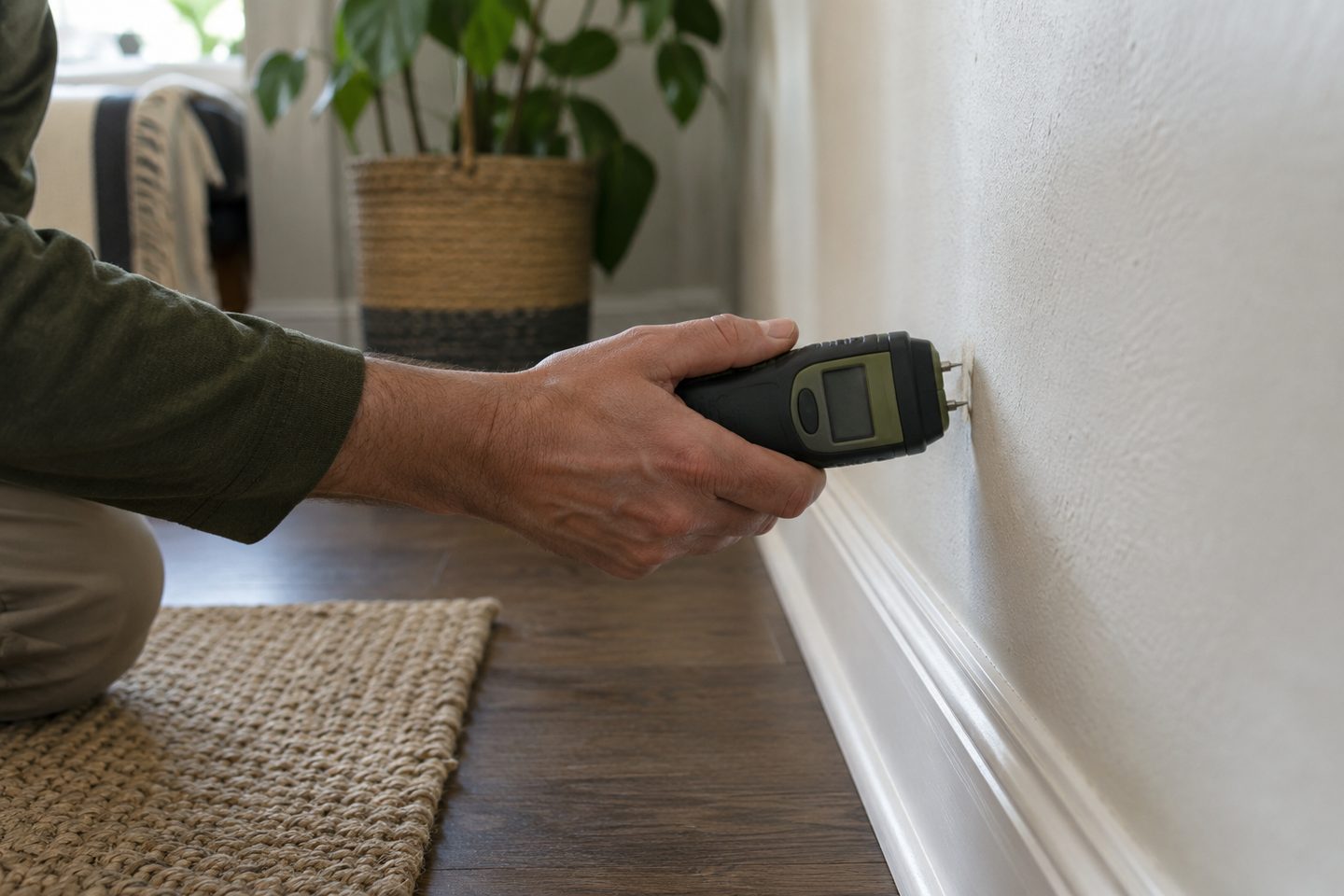
| Moisture survey | Where water is entering and how far it has reached, with meters and thermal imaging. | Species — and it rarely needs to. | $300–$800 | 2–4 hours on site, report in 24–48 hours |
Why there is no such thing as a toxic mold test
A laboratory can tell you what organism is present. It cannot tell you that the organism was producing toxins in your building, because production is not constant, is not universal to a species, and depends on the substrate and conditions at the time.
So the presence of a species capable of producing mycotoxins is not evidence that any were produced. That is the single most important sentence on this page, and it is the one the phrase "toxic mold test" is built to obscure.
"Toxic mold" is also not a scientific category. The EPA and CDC both treat it as a misnomer, and their remediation guidance turns on removing the moisture and the affected material regardless of what a laboratory would name.
What the evidence reviews actually support
The Institute of Medicine's Damp Indoor Spaces and Health in 2004 and the World Health Organization's dampness and mould guidelines in 2009 are the two anchoring reviews. Both found sufficient evidence of association between damp indoor environments and upper respiratory symptoms, cough and wheeze, and with asthma exacerbation in people who already have asthma.
The consistent finding in both is that the exposure tracking with health outcomes is dampness, not a particular organism. Neither review supports the idea that a specific species causes a distinct syndrome by a distinct mechanism at household exposure levels.
For most outcomes beyond the respiratory and allergic ones, the IOM concluded the evidence was inadequate or insufficient to determine whether an association exists. That is a statement about what the research can support — not a finding of no effect, and not a clearance.
None of that makes a damp building acceptable. It makes the remedy the same one it always was: find the water and stop it.
What Stachybotrys actually tells you
That there has been sustained liquid water. It needs a water activity around 0.90 to grow, well above the roughly 0.80 that Aspergillus and Penicillium manage, so its presence indicates a persistent source rather than incidental humidity.
That is a genuinely useful building finding, and it is a different claim from the one usually made about it. It says look harder for the leak, not that the occupants have been poisoned.
Colour is not identification. Many unrelated molds are dark, and a dark patch identified by eye tells you nothing about what it is.
When sampling is worth paying for
Documentation. Establishing on the record what was present, where and when, for a dispute, a claim or a sale. This is the strongest reason and it needs a professional protocol — chain of custody, controls, a defensible method.
Clearance after remediation, performed by someone with no part in the removal, against criteria agreed before the work started.
A building that smells wrong with nothing visible to explain it. Air sampling is one of the few tools available for that, and only with a same-day outdoor control.
The CDC's position otherwise is that where growth is visible, sampling is generally unnecessary — because the response does not change with the answer.
What to do instead
Find the water. Growth is a symptom of moisture, and removal without correcting the source is cleaning — it returns on the schedule it always had.
Buy the survey before the sample. A moisture survey locates; sampling identifies. Buying identification first is the most common way several hundred dollars produces a laboratory report and no idea where the water is.
Hold indoor humidity between 30% and 50%, extract to outside rather than into a loft, and correct water entry before finishing anything over it.
If anyone in the building is unwell, see a clinician. No test sold to a homeowner, and no property assessment including ours, can answer a health question in either direction.
The basis for these figures
General US ranges for planning, not quotes and not local data. Get two written quotes before commissioning professional sampling.
Questions people ask
- Can a test tell me if the mold in my house is toxic?
- No. A laboratory identifies the organism. Toxin production is not constant and not universal to a species, so identifying a species capable of producing them is not evidence that any were produced.
- Is a black mold test worth buying?
- Only with the lab step, and mainly for documentation. Colour is not identification, and the remediation does not change with the answer.
- What about ERMI?
- It was developed by the US EPA as a research tool and, as the agency has stated, was not validated as a diagnostic for individual buildings. It is frequently marketed as though it were.
- Should I get a urinary mycotoxin test?
- That is a question for a clinician. Direct-to-consumer panels were not validated for establishing building-related exposure and a result from one is difficult to interpret.
- If I cannot test for toxicity, what should I test for?
- Moisture. Where the water is entering and how far it has reached is the finding that determines both the remedy and its cost.