Reducing a property's mold risk
How to reduce mold risk score for a house: the fixable weight is site drainage, ventilation and indoor humidity. Climate, terrain and construction era cannot be changed and should not be chased.
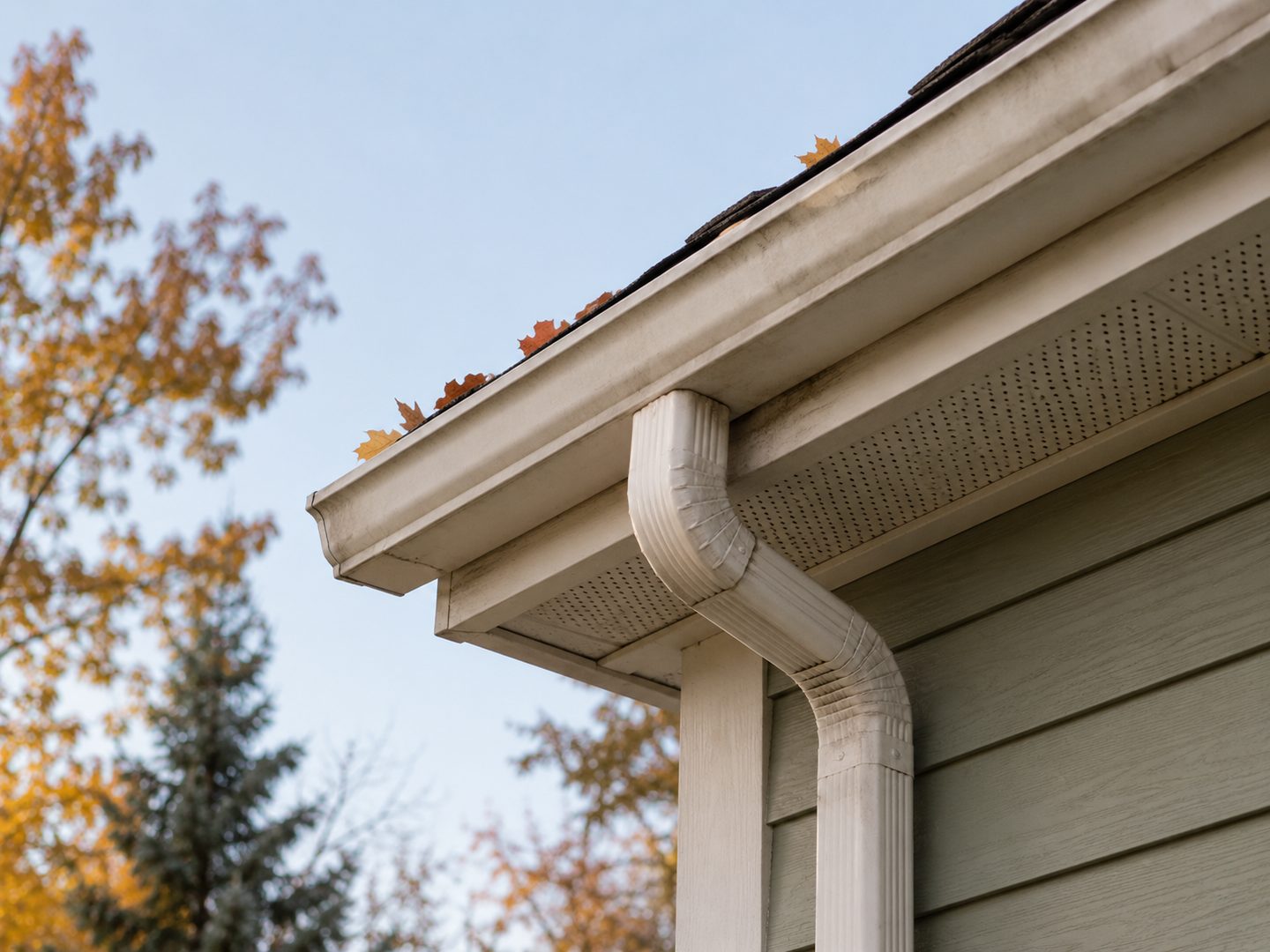
Step by step
Separate what is fixable from what is fixed
Before spending anything, split the driver list in two. Climate, terrain, construction era and structural form are fixed — nothing you do changes them, and a contractor promising otherwise is selling something. Site drainage, ventilation, indoor humidity, and the condition of the roof and envelope are all fixable, and between them they carry most of the movable weight.
Fix the grading and the discharge first
Ground should fall away from the building — roughly 150mm over the first 1.5 metres is the usual guidance — and downspouts should discharge well clear of the foundation rather than at its base. This is the highest-value intervention available because it addresses bulk water, it is cheap relative to everything else, and it is the thing most often wrong. Terrain and Drainage is worth 10 points of the model and site defects are the part of it you control.
Bring indoor humidity into range and keep it there
Target 30% to 50% relative humidity through the cooling season, measured in more than one room. Below 30% is uncomfortable and does nothing extra; above 60% supplies enough moisture that cold surfaces reach the germination threshold without any leak involved. A hygrometer in the basement and one upstairs will tell you more about a building than most single inspections.
Make the ventilation match the envelope
Bathroom and kitchen extraction should be ducted outside — not into a loft — and should run long enough to clear the moisture rather than for the length of the shower. Where a house has been air-sealed or had windows replaced without ventilation being addressed, that mismatch is the specific 1990s failure mode reproduced in a modern retrofit.
Correct the source before finishing anything
If there is an active leak, a failed flashing detail or a wall that stays wet, that is the work. Removing growth without correcting the source is cleaning, and the growth returns on the same schedule. This is also the difference between remediation that holds its value at resale and remediation that does not.
Get what you fixed onto the record
The model reads records. A regraded lot and a corrected drain do not reach one by themselves, which is why a well-maintained property in a vulnerable category still scores as its category. Keep the invoices and the scope of work, and re-score with them attached so what changed is reflected rather than assumed.
Be realistic about how far a score moves
Twenty of the hundred points are climate and cannot move at all. Most of the terrain module is position rather than management. A good part of the building module is era and form. Taken together, a substantial share of any score is simply not addressable, and a page promising otherwise would be selling work that does not pay for itself.
What does move: the fixable site and envelope items, and — most of all — resolving anything documented. An unresolved water intrusion imposes a floor. Correcting the source, having the work scoped, and having an independent clearance confirm it is the intervention with the largest effect on both the score and on what the property is worth to a buyer.
The honest framing is that lowering a score is a side effect of fixing a building. Chase the score directly and you will spend money on the wrong things.
What needs a re-score to show up
Anything you fix that the record does not already know about. A drain corrected, a roof replaced, a disclosure event resolved with documentation — none of these reach the model unless they are supplied.
Anything that changes a verified fact. If the construction year was estimated from a census-tract median and you can produce a parcel record, that alone can move the building module substantially, in either direction.
An occupant intake, if you live there. It is the only input from inside the building and it is worth up to 20 points of contribution.
Questions people ask
- How much can I actually lower it?
- It depends on how much of your score is fixable, which the driver list tells you. A score driven by climate, terrain and era has little movement in it. One driven by an unresolved disclosure event and poor drainage has a great deal.
- Will a dehumidifier fix a wet basement?
- Not if the water is coming from the ground. A missing capillary break feeds moisture continuously, and the machine ends up dehumidifying the soil. Manage surface water outside first.
- Does remediation lower the score?
- Remediation with a documented source correction and an independent clearance does, because it resolves the event that was setting a floor. Removal alone, with the source untouched, does not — and it should not.
- What indoor humidity should I hold?
- 30% to 50% through the cooling season. Measure in more than one place: a basement and an upstairs room often differ by more than either occupant expects.
- Is it worth re-cladding a house with barrier EIFS?
- Not for the score. It can be worth it for the building, if a moisture survey finds the assembly is taking water — which is the question to answer first.