Behind finished walls
Especially below grade, and especially where drywall was installed against masonry. The cavity stays cool, cannot dry, and hides everything until the smell arrives.
A persistent musty smell with nothing visible usually means wet material somewhere out of sight — behind a finished wall, under flooring, inside a wall cavity or in the ductwork. The smell is real information: it is produced by active growth, so it points at a live moisture problem rather than an old one.
Editorial policy · Provider standards
Especially below grade, and especially where drywall was installed against masonry. The cavity stays cool, cannot dry, and hides everything until the smell arrives.
A slow leak under a dishwasher, a fridge line or a toilet flange spreads through the subfloor well beyond the fixture.
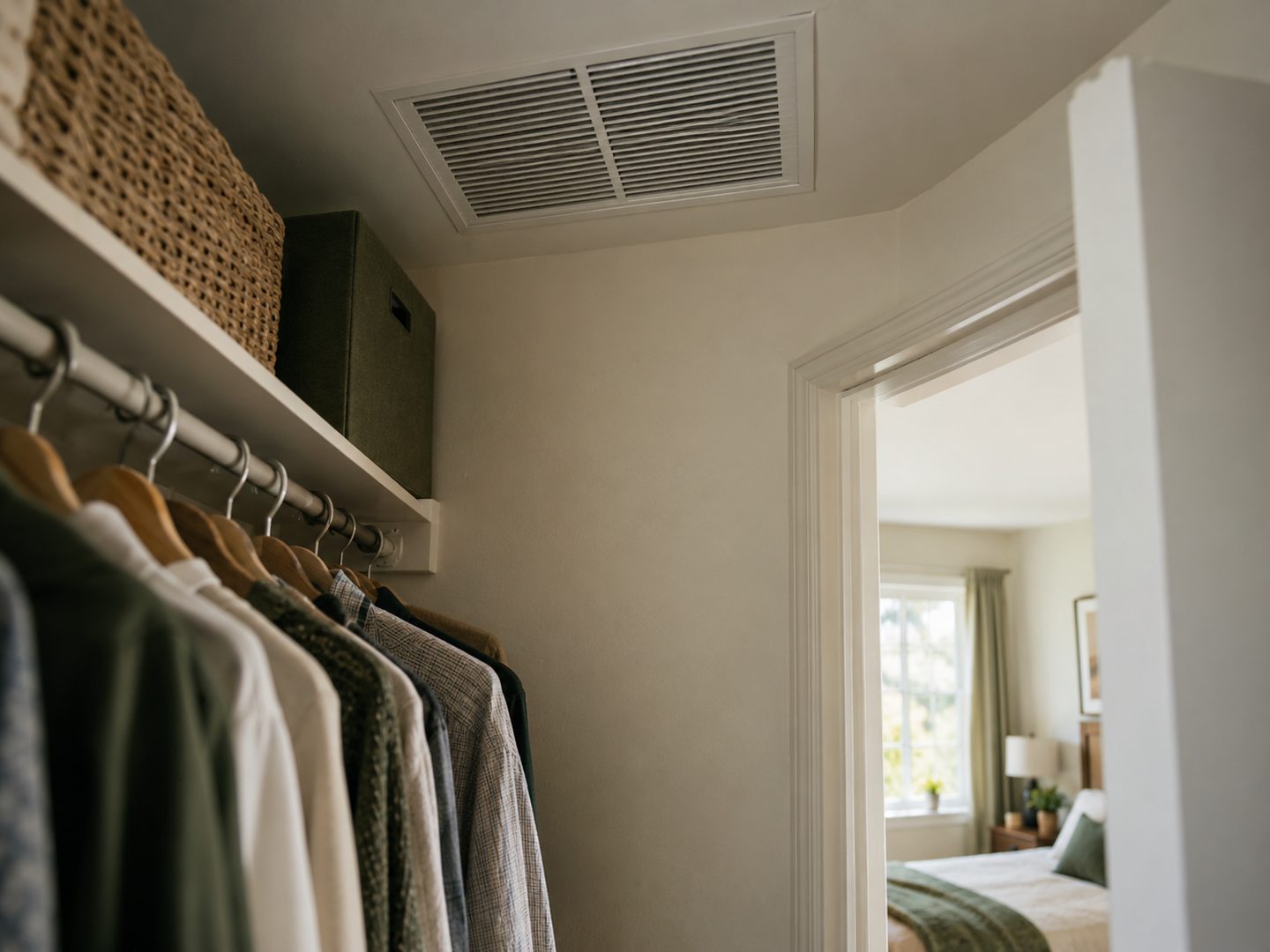
Growth on a coil or in a duct distributes the smell through the whole house, which is why it can seem to come from everywhere. A telltale sign is the smell strengthening when the system starts.
Ground moisture with poor ventilation. The smell travels up through the floor assembly, so the source is often nowhere near where you notice it.
Condensation on roof sheathing from a bathroom fan venting into the attic rather than outside. Common, and usually inexpensive to correct.
None of this requires opening up a wall or disturbing anything that looks like growth.
Before you pay anyone, it is worth knowing what the building's own conditions look like — age, basement type, drainage, rainfall and flood history all shape how likely a moisture problem is here.
A data-based estimate — not an inspection, mold test, or medical diagnosis. How this works · How we handle your address
This is the situation inspection technology is best at: meters and a thermal camera find wet material behind finishes without opening them. Air sampling before the source is located tells you something is present without telling you where, which rarely changes what you do next. Locate it first, then sample only if you need the documentation.
Establishes whether there is a moisture problem, where the water is coming from, and whether sampling would add anything.
Find testing professionals →Contains, removes, and dries affected material against a scope that has already been identified and documented.
Find remediation companies →Verifies that completed work met its own scope, carried out by someone who did not perform the work.
Find independent verification →This page explains a building problem and how to decide what to do about it. It does not diagnose a health condition, confirm mold in any specific property, or replace an on-site assessment. Health questions belong with a licensed clinician.
One address, a few seconds, and a clear read on what to look into next.
A data-based estimate — not an inspection, mold test, or medical diagnosis.